Why Simulation-Based Learning Is Changing Emergency Medicine Education
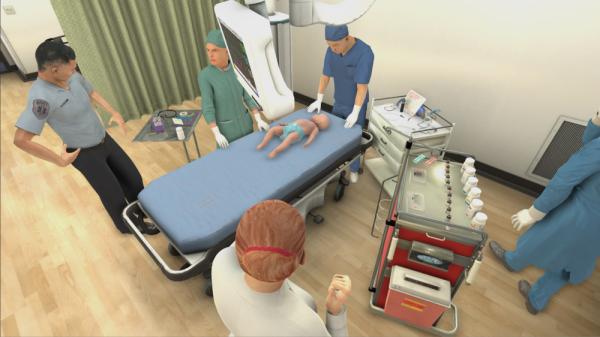
Emergency medicine has always been a specialty built around rapid decision-making, adaptability, and
performance under pressure. Yet for many years, medical education relied heavily on passive learning
methods such as lectures, textbooks, and static question banks.
Today, simulation-based education is transforming how physicians train for both real clinical practice
and high-stakes examinations like the ABEM Certifying Exam.
Learning Through Experience
Simulation creates opportunities for active learning by placing physicians into realistic clinical
scenarios that require immediate decision-making. Instead of simply reviewing information, learners
must:
- gather clinical data,
- prioritize interventions,
- reassess patients,
- communicate effectively,
- and manage evolving emergencies.
This mirrors the actual cognitive demands of emergency medicine far more closely than passive studying
alone.
The Importance of Deliberate Practice
One of the greatest advantages of simulation is repetition. Physicians can repeatedly practice high-risk
scenarios in a safe learning environment without risk to patients.
Over time, this deliberate practice improves:
- clinical organization,
- efficiency,
- situational awareness,
- communication,
- and confidence.
Simulation also exposes learners to challenging presentations that may not frequently occur during
clinical shifts.
The Emerging Role of Artificial Intelligence
Artificial intelligence is creating new possibilities within medical simulation. AI-powered systems can
now generate dynamic patient responses, adaptive case progression, individualized feedback, and evolving
clinical scenarios based on learner decisions.
This creates a more interactive and realistic educational experience compared to traditional static case
review.
Rather than memorizing idealized responses, learners practice navigating uncertainty, incomplete
information, and changing patient conditions—just like in real emergency medicine practice.
The Future of Emergency Medicine Education
s simulation technology continues to evolve, emergency medicine education is likely to become
increasingly immersive, adaptive, and performance-focused.
The future of board preparation will not simply involve memorizing facts. It will involve training
physicians to think critically, communicate effectively, and manage complexity under pressure through
realistic simulation experiences.
The ultimate goal is not only exam success, but better preparation for real-world emergency medicine
practice.